
Listen Instead?
Bahamians are becoming fat and sick because of all of the imported food. The ultra processed food is terrible, and it can’t be avoided because we do not make our own food.
This initial thought led me to my exploration of the agriculture system in The Bahamas.
In The Bahamas, we import about 92% of our food; for all practical purposes, we can say that all of our food is imported. Mostly from the United States. This is not good. In an emergency such as a pandemic or war where the United States would be unable to export food, I suspect that most of us would starve to death, unfortunately. Less than 0.5% of our GDP is associated with agriculture, far lower than the Caribbean average of about 4.6% of GDP.
We know that a problem recognised is a problem solved, so in this article, I will tell you a bit of what I learned in looking into the issue and also some practical ideas that I have to solve it.
Good Day everyone, I’m Nico Miller.
Current State of Agriculture in The Bahamas
The first question that I had was, how is farming currently done? I wanted to get a basic breakdown of how exactly a Bahamian farmer would grow his products and get them to market, and this is what I discovered:
Most farms are very small. There are essentially no large farms, and all of the labour is manual, not mechanised. To produce lots of food, it must be the inverse, heavily mechanised and large farms. (I won’t discuss backyard farms because this article is geared towards the issue of practically feeding the country. Therefore, those are irrelevant, as that production is not commercialised or able to feed many.) Crops are mostly irrigated through rain catchment, wells, and drip irrigation (where funded by the government).
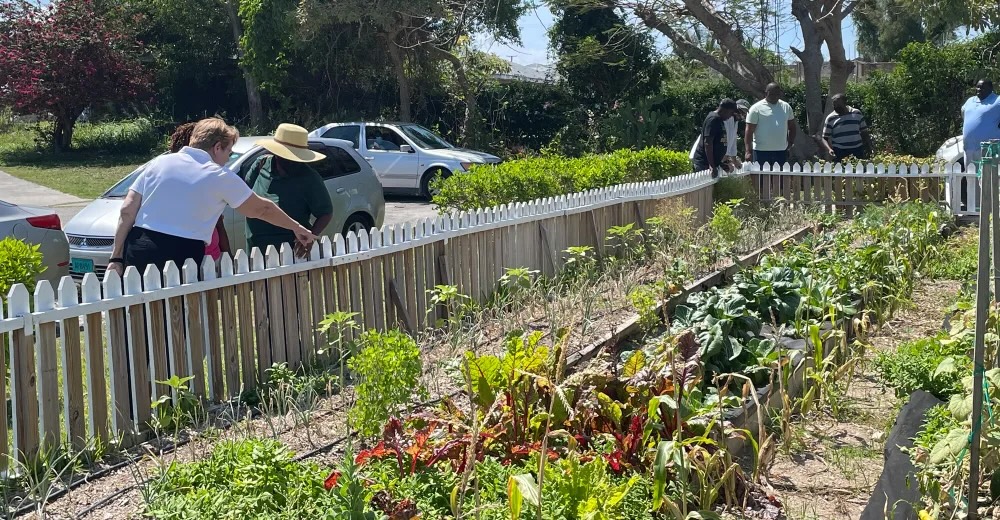
When ready, the produce is usually collected manually, and there is no forced air or hydrocooling, so heat starts damaging it within hours.
The produce is typically stored on the farms, in ambient temperature, rarely in cooled facilities. There is no central storage, national package houses or national cold room. Therefore, if farmers don’t sell quickly, they lose their product. This places them at a huge disadvantage compared to imported food, as logistics are challenging in The Bahamas.
The soil in The Bahamas is shallow limestone, and irrigation can be an issue. However, other countries with similar issues have overcome these constraints, which is discussed later in this article. So this is not enough to thwart the efforts of agriculture in the country.
The key takeaway from this section is that production is small-scale, unmechanised, and disorganised, as there is no national crop planning.
Distribution
I will focus on inter-island distribution as most farmland is on the family islands, but a vast majority of the people are in New Providence and Grand Bahama, the islands of the first and second cities. Currently, to get produce from the family islands to the cities, the produce is shipped to docks via mailboats, and the individual farmers must arrange for its pickup and delivery to its buyers.
International export is very small and inconsistent, such as small volumes of pineapples and speciality produce. The process by which this is done is, first, a farmer or small buyer aggregates produce, then the Ministry of Agriculture issues a phytosanitary certificate, then customs clears export, and it is usually shipped from the Nassau or Freeport Container Port, to Florida (Miami/Ft. Lauderdale) USA. This is an oversimplifcation of course, and those steps can be very difficult in practice, especially for a small farmer.
I won’t focus too much on the export of food in this article right now, because we must first produce food to feed ourselves before we can export to others, and it is much easier to focus on the domestic market.
Processing/Value Addition
This is where the magic should happen for food. Where it is processed, canned, made into final products, in the form that we purchase from stores. Think turning tomatoes into canned tomato paste. This capability is basically nonexistent.
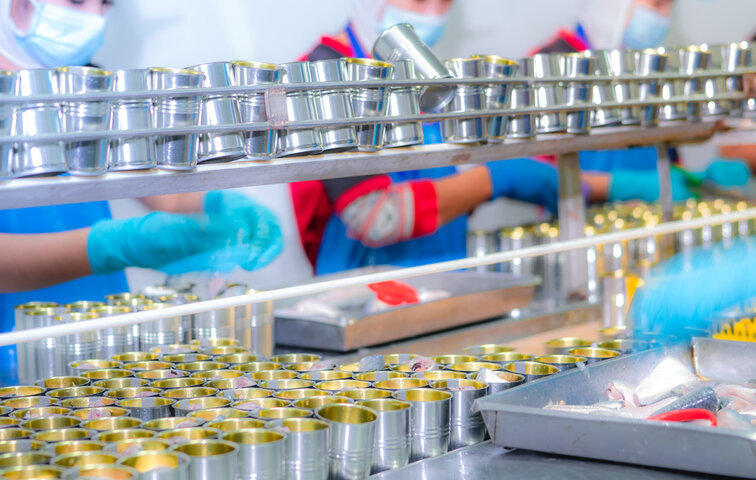
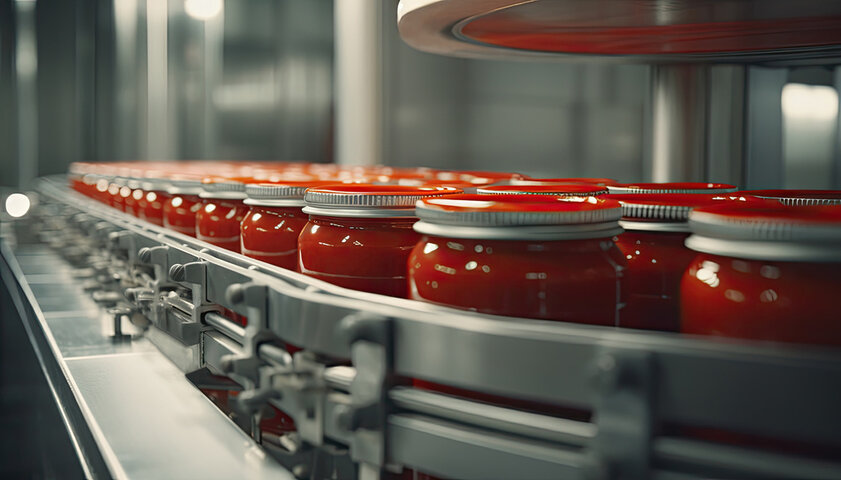
The agencies responsible for regulation and oversight are the Ministry of Agriculture, BAHFSA, and Bahamas Customs. But they have no operational role in logistics, no enforcement of standards and no aggregation authority, so I believe they are ineffective at truly increasing agricultural output.
Discussion
Now that you know what I know, let’s start our discussion.
In Bahamian stores, there are not usually many Bahamian products. Essentailly all value-added products, such as canned and jammed products and even most fresh produce, are imported. Meaning that there is an issue with farmers bringing their produce to the domestic market consistently and effectively. This is a very big problem which must be overcome.
Growing up, I remember that there was Albury’s Champion, a Bahamian brand of canned products, DairyMaid Ice Cream products and many others that I can not remember. They have all shut down. Meaning that although the country has gotten more prosperous, we have lost the little productive capacity that we had.
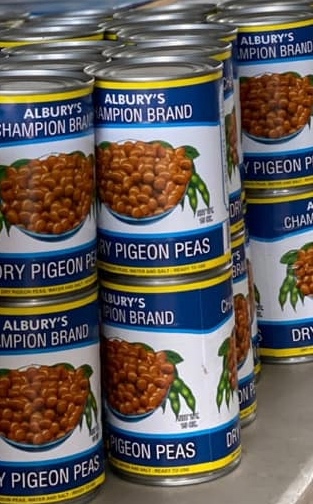
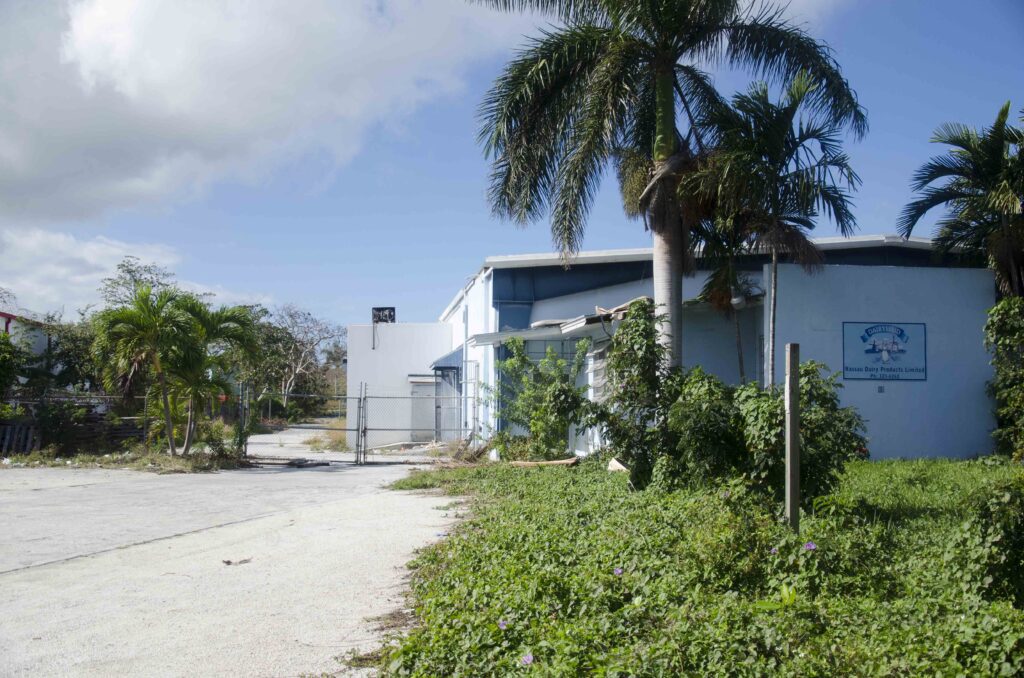
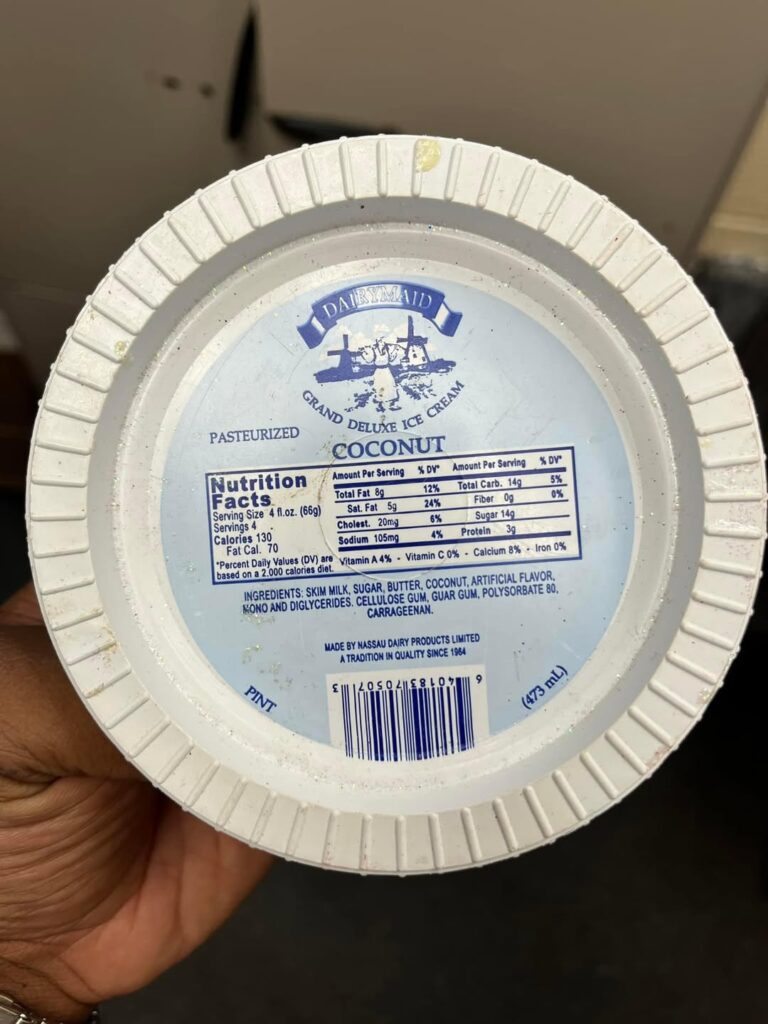
Another thing that I have noticed is that, as a highly fertile sub-tropical country, we naturally have trees such as coconut trees and mango trees everywhere. But even these go to waste. There is no way for these to be centrally collected and placed into stores or exported.
Comparison With Other Countries
As I like to do, I will mention countries which are similar to us and have excelled in this area as examples:
Countries in the Caribbean that share similar geographic and soil limitations are the Dominican Republic, Jamaica and Cuba. What works well for them is that they focus on a few crops and build global demand, and they build entire value chains around them, such as packing houses, refrigeration and port infrastructure. They have value-added processing, which I think is most important, and they have state-supported distribution networks.
These examples are noteworthy as we are one of the richest countries in the Caribbean (on a per capita basis); if any other country in the Caribbean can do it, we certainly can.
For countries not in the region. Israel is one of the top agricultural exporters despite being desert; they use drip irrigation, desalination, reclaimed wastewater, and precision agriculture using high-tech systems. We can take inspiration from these methods to make the most of our water, as ours is mostly salty since we have no rivers for freshwater. Singapore uses high tech verical farming, and the Netherlands use greenhouses and very good logistics.
The Bahamas is not bad at agriculture because of climate or soil, it is bad because we farm like a poor Caribbean country whilst having the capital of a rich one. Countries with worse land and less water outperform us by using technology, good processing, policy discipline and good logistics.
| Area | The Bahamas | Better Countries Do |
|---|---|---|
| Land use | Fragmented, informal | Protected agricultural zones |
| Crop choice | Too many, low-margin | Few, high-value crops |
| Water | Rain-dependent | Drip, desalination, recycling |
| Tech | Minimal | Sensors, greenhouses, hydroponics |
| Processing | Almost none | Heavy value-added processing |
| Exports | Negligible | Targeted niche exports |
| Policy | Reactive | Long-term food security plans |
| Tourism link | Weak | Mandatory local sourcing |
Why Past Projects Bahamian Agriculture Projects Have Failed
I have read lots of reports and articles in researching for writing this piece, especially of the past attempts from the government at improving the agriculture industry. And I have an idea of why they fail. (I’ll link my references below if you are curious; some of them are very good reads.)
Most of the government initiatives have been small projects, pilot programs and unproven tests. Mostly just political stunts and wishful thinking.
The blueprint was as follows: they were all grant funded, politically announced, time limited pilots that focused on deliverables such as acres planted and farmers trained. Rather than building up the critical infrastructure, value chains, buyer contracts, and profit mandates.
The issue with this is that once the funding ended, operations collapsed. To add insult to injury, there was also no database made of trained expertise so that the private sector could scoop up these farmers who were trained. Wasted money and terrible for everyone.
These were mistakes, not malicious sabotages of our own food system. We must just stop operating on the naïve assumption that “things will fix themselves and work out.” We can only have great systems with conscious, continuous effort. I think that the government should focus on the backbone of the system, which are immense hurdles for individual farmers, such as logistics and infrastructure, but are very doable for the government.
Nico’s Ideas / Vision for the Agriculture Industry in The Bahamas
I believe that the problems facing the agriculture system today can be summarised by the lack of logistics, lack of critical infrastructure and disorganisation/decentralisation.
Solutions:
National package houses, which would be shared facilities and ideally have one central packagehouse per major island. These are where produce can be aggregated.
Cold chain storage, including refrigerated ferries, trucks, and reefer containers. which would support transit of produce between islands without spoilage.
Value processing capabilities must be made to turn food into more useful products.
For export logistics, we should have two export consolidation hubs, in Nassau and Grand Bahama, for cold storage, packaging, quality inspection and export documentation. Along with this should be an export mechanism, where farmers do not export but licensed exporters that handle quality control, aggregation, shipping, and sales, so that the farmers can focus on farming.
We should focus on doing a few crops well rather than one farmer doing a small amount of a variety of crops as is done now, therefore I believe we should stick to one or two crops per island.
In terms of organisation, farmers should be kept in a national database so their output can be tracked and they can be helped if need be.
The Principles of these, rather than the details themselves, should be thought about, as the details can be debated later, for a polished system.
Nico’s Principle Ideas
- No buyer = no planting
- Processing Capacity Built before production
- Aggregation beats independence
- Few crops, done well
- Private operators, public regulation
- Export revenue funds local food security
- Good organisation and Monitoring of Farms
- Good Logistics for Transport of Produce
I’m Nico Miller, and this exploration into agriculture in The Bahamas has been perhaps my favourite article to write. I learned a lot about farming in the country that I was curious about. If you liked this article, subscribe to my blog so you can know when I make similar ones, and follow me on social media. I’m always looking for new things to write about or look into, so if you have any ideas for me please let me know. You can comment here, email, or reach me via social media.
Please share this with everyone you think would be interested. The links are below.
Sources
I read many reports and articles on agriculture in The Bahamas, and I encourage you to read them as well. (Some are decently old from around 2017-ish and 2021-ish, but they still apply as the industry has been stagnant/slightly in decline.
A report from the Inter American Development Bank (I think this one is the best read, very insightful) – Analysis of Agricultural and Fisheries Policy in The Bahamas
United Nations Food Article Written by The Bahamas Ministry of Agriculture (Very good read) – The Bahamas National Pathway for Food Systems Transformation in support of The 2030 Agenda
Caricom Agriculture Website (Not all that helpful)
American Website on Trade, a page relating to The Bahamas (Not all that useful)
A few Articles by The Tribune, a Bahamian Newspaper:
Hydroponic Farming, Coconut Article, Pineapple Article, Closure of Albury’s Champion
Bahamas Local Website Article about the Closure of Albury’s Champion Brand (I couldn’t find the Nassau Guardian Newspaper article online)